It's no wonder Oklahoma ranks 50th in public education nationally.
Oklahoma Kids Have To Be In Class More.
At 166, Oklahoma public schools’ total number of in-class instructional days rank near the bottom nationally. These 166-days are prescribed by State law for the current school year 2026-27 and includes 5 teacher development days and 2 parent/teacher conference days baked into the 166 days. So the real number of in-classroom instructional days is actually 159 days.
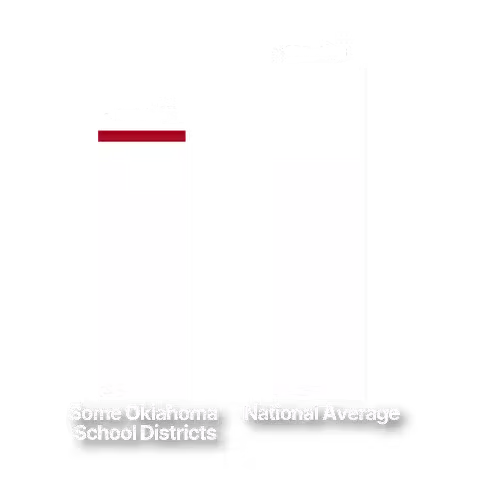
Across the United States, the in-classroom instruction average is 180 days. Kansas’ mandates 186 days and is the highest number of in-person classroom days nationally. Arkansas mandates 182 days. And many foreign countries require as many as 220 days in classroom instructional days.


Yet another reason why Oklahoma ranks 49th or 50th in public education nationwide.
So why does Oklahoma rank so low?
The short answer is, while 166-days is the State law, many Oklahoma school districts simply don’t abide by it. And it’s those kids who ultimately pay the price.
Here’s an unfortunate example: In the school year 2025-26, at least two Oklahoma school districts were using Virtual Fridays* in their yearly count of 166 instructional days. Yet, when accounting for 5 teacher development days, 2 parent/teacher conference days and their 17 ‘Virtual Fridays’ over the year, that left only 142 in-class instructional days in these two districts.
And here's the real world difference.
Arkansas mandates 182 days in class with up to 5 bad weather days. Assuming Arkansas takes all 5 weather days in a school year, that leaves them at 177 days of in class instruction. So let’s compare a typical 14-year public education career (PreK – 12th grade) between Arkansas and these two Oklahoma school districts.
Arkansas: 177 in-class days x 14 years = 2,478 in-class days.
Two Oklahoma districts: 142 in-class days x 14 years = 1,988 in class days.
The difference is a staggering 490 fewer days of in-classroom instruction.